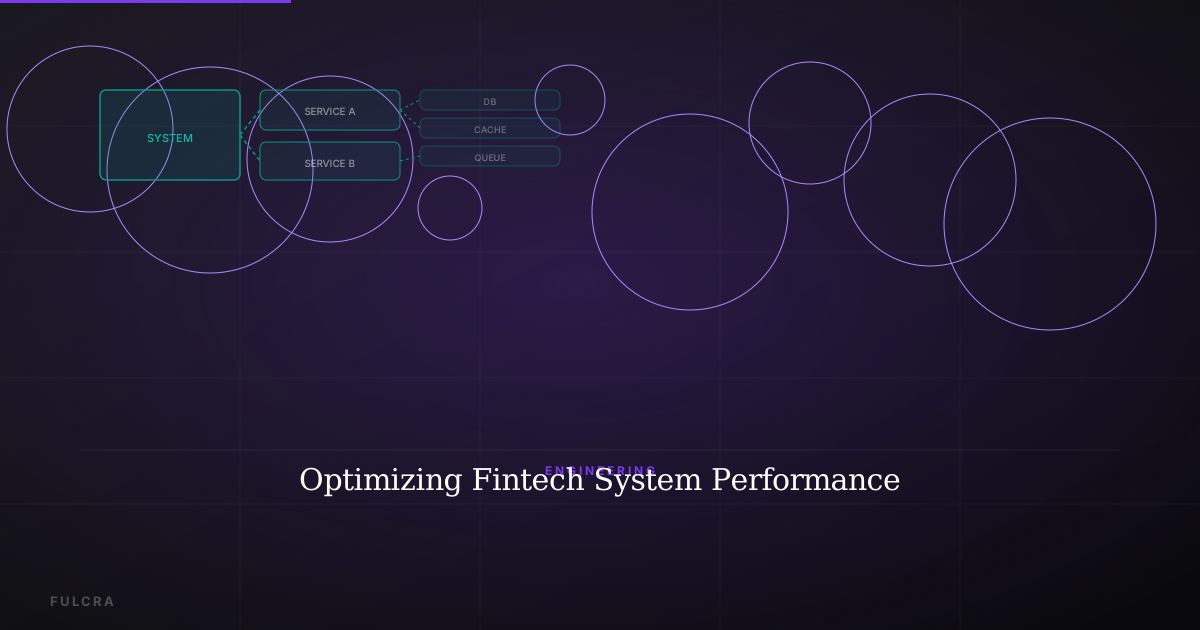
Introduction to Fintech System Performance
Fintech systems require high performance and low latency to provide a seamless user experience. In this post, we will explore various techniques to optimize the performance of fintech systems. We will discuss the importance of caching, load testing, and queue-based architecture in improving the performance of fintech systems.
Caching Strategy
Caching is a technique used to store frequently accessed data in a faster and more accessible location. In fintech systems, caching can be used to store data such as user information, transaction history, and market data. There are several caching strategies that can be used, including time-to-live (TTL) caching, least recently used (LRU) caching, and most recently used (MRU) caching.
// Example of a simple caching mechanism using a TTL cache
class Cache {
  private cache: { [key: string]: { value: any; expires: number } };

  constructor() {
    this.cache = {};
  }

  get(key: string) {
    const cachedValue = this.cache[key];
    if (cachedValue && cachedValue.expires > Date.now()) {
      return cachedValue.value;
    }
    return null;
  }

  set(key: string, value: any, ttl: number) {
    this.cache[key] = { value, expires: Date.now() + ttl };
  }
}
Load Testing
Load testing is a technique used to measure the performance of a system under a heavy load. In fintech systems, load testing can be used to simulate a large number of users and transactions. There are several load testing tools available, including Apache JMeter and Gatling.
Queue-Based Architecture
Queue-based architecture is a design pattern used to handle high volumes of requests and transactions. In fintech systems, queue-based architecture can be used to handle transactions such as payments and transfers. There are several queue-based architecture patterns available, including message queues and job queues.
// Example of a simple message queue using a Redis queue
import { createClient } from 'redis';

class MessageQueue {
  private client: any;

  constructor() {
    this.client = createClient();
  }

  async sendMessage(message: string) {
    await this.client.rpush('messages', message);
  }

  async receiveMessage() {
    const message = await this.client.lpop('messages');
    return message;
  }
}
Conclusion
Optimizing the performance of fintech systems is crucial to provide a seamless user experience. By using techniques such as caching, load testing, and queue-based architecture, fintech systems can be optimized to handle high volumes of requests and transactions. If you're looking to optimize your fintech system's performance, consider reaching out to our team of experts at Fulcra to learn more about how we can help.