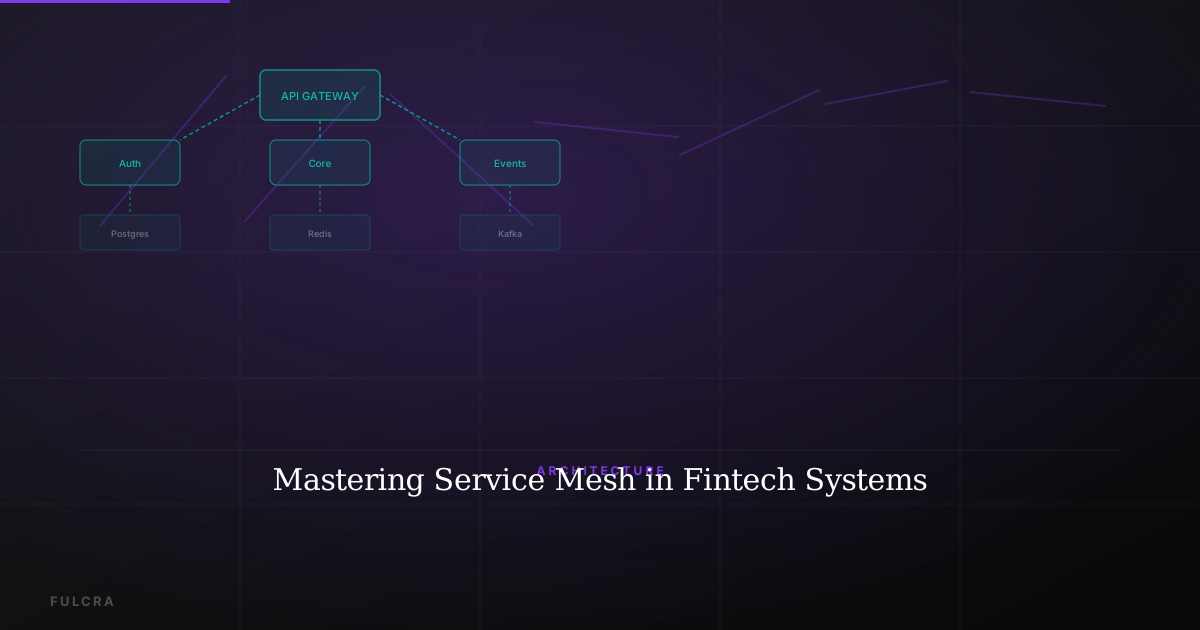
Introduction to Service Mesh
A service mesh is a configurable infrastructure layer that allows for the management of service-to-service communication in a microservices architecture. It provides features such as traffic management, security, and observability, making it an essential tool for ensuring the reliability and performance of fintech systems.
Benefits of Service Mesh in Fintech Systems
The use of a service mesh in fintech systems offers several benefits, including:
- Improved security: Service mesh provides features such as encryption, authentication, and authorization, which help to protect sensitive financial data.
- Increased reliability: Service mesh provides features such as circuit breakers, load balancing, and fault injection, which help to prevent cascading failures and ensure that the system remains available even in the event of failures.
- Better observability: Service mesh provides features such as tracing, logging, and monitoring, which help to identify issues and debug problems.
Implementing Service Mesh with Istio
One popular service mesh implementation is Istio, which provides a comprehensive set of features for managing service-to-service communication. To implement Istio in a fintech system, you will need to:
- Install Istio: Install Istio on your cluster using the Istio CLI.
- Configure services: Configure your services to use Istio by creating a service mesh configuration.
- Implement traffic management: Implement traffic management features such as circuit breakers and load balancing using Istio's traffic management API.
// Example of a service mesh configuration using Istio
import { Injectable } from '@nestjs/common';
import { IstioService } from 'istio-client';

@Injectable()
export class PaymentService {
  constructor(private readonly istioService: IstioService) {}

  async makePayment(paymentRequest: PaymentRequest): Promise<PaymentResponse> {
    // Create a service mesh configuration
    const serviceMeshConfig = {
      services: [
        {
          name: 'payment-service',
          host: 'payment-service.example.com',
          port: 80,
        },
      ],
    };

    // Configure the service mesh
    await this.istioService.configureServiceMesh(serviceMeshConfig);

    // Implement traffic management features
    const circuitBreakerConfig = {
      name: 'payment-service-circuit-breaker',
      threshold: 5,
      timeout: 30,
    };
    await this.istioService.createCircuitBreaker(circuitBreakerConfig);

    // Make the payment request
    const paymentResponse = await this.makePaymentRequest(paymentRequest);
    return paymentResponse;
  }

  private async makePaymentRequest(paymentRequest: PaymentRequest): Promise<PaymentResponse> {
    // Implement the payment request logic
  }
}
Best Practices for Implementing Service Mesh
When implementing a service mesh in a fintech system, there are several best practices to keep in mind:
- Start small: Start by implementing the service mesh in a small part of the system and gradually roll it out to the rest of the system.
- Monitor and debug: Monitor the system and debug issues as they arise to ensure that the service mesh is working correctly.
- Test thoroughly: Test the system thoroughly to ensure that the service mesh is working correctly and that the system is reliable and performant.
Conclusion
In conclusion, a service mesh is a powerful tool for improving the reliability and performance of fintech systems. By implementing a service mesh using a framework such as Istio, you can provide features such as traffic management, security, and observability, which help to protect sensitive financial data and prevent cascading failures. To get started with implementing a service mesh in your fintech system, contact us at Fulcra to learn more about our expertise in service mesh implementation and fintech system development.