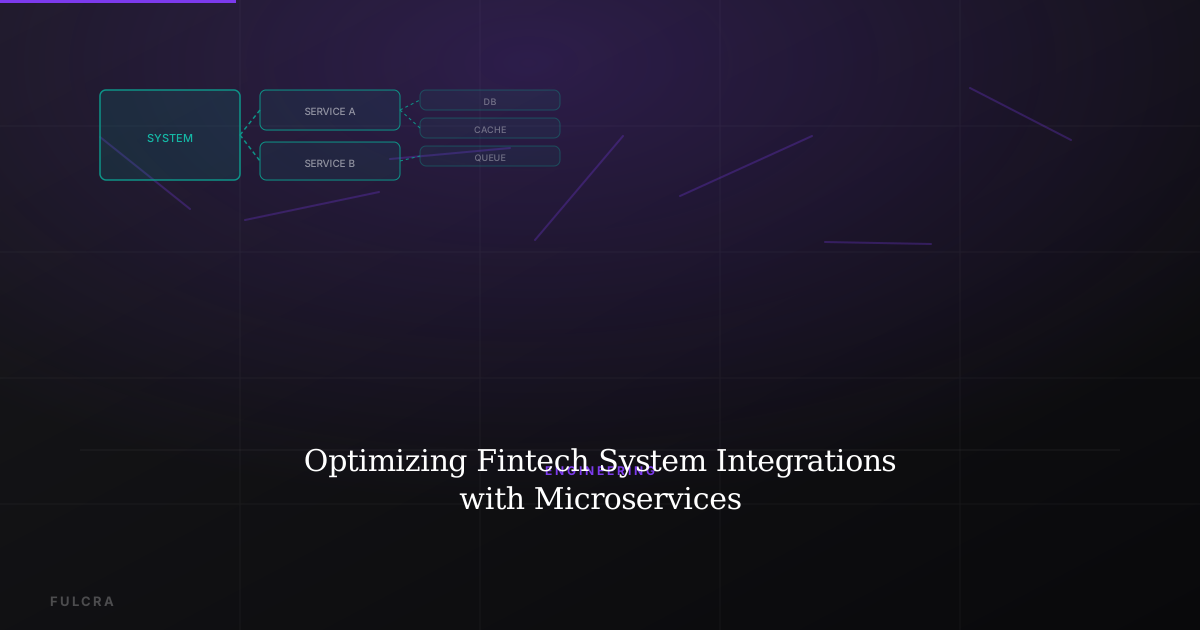
Introduction to Microservices
Microservices architecture has become a popular choice for building complex systems, including fintech systems. By breaking down a monolithic system into smaller, independent services, microservices enable greater flexibility, scalability, and resilience. However, integrating these services can be challenging, especially in a fintech system where data consistency and security are critical.
Benefits of Microservices in Fintech
The benefits of microservices in fintech include:
- Improved scalability: Each service can be scaled independently, allowing for more efficient use of resources.
- Increased resilience: If one service experiences issues, it won't bring down the entire system.
- Faster development: Smaller services enable smaller teams to work independently, reducing development time.
Challenges of Microservices Integration
However, microservices also introduce new challenges, such as:
- Service discovery: How do services find and communicate with each other?
- Data consistency: How do services ensure data consistency across the system?
- Security: How do services authenticate and authorize each other?
Service Discovery Patterns
To address the service discovery challenge, several patterns can be used, including:
- API Gateways: Acting as an entry point for clients, API gateways can route requests to the appropriate services.
- Service Registries: Services can register themselves with a registry, allowing other services to discover and communicate with them.
// Example of a service registry using TypeScript
interface Service {
  name: string;
  url: string;
}

class ServiceRegistry {
  private services: Service[] = [];

  registerService(service: Service) {
    this.services.push(service);
  }

  getService(name: string): Service | undefined {
    return this.services.find((service) => service.name === name);
  }
}
Data Consistency Patterns
To ensure data consistency, several patterns can be used, including:
- Event Sourcing: Services can store the history of an application's state as a sequence of events.
- CQRS: Services can use command query responsibility segregation to separate read and write operations.
Security Patterns
To ensure security, several patterns can be used, including:
- OAuth 2.0: Services can use OAuth 2.0 to authenticate and authorize clients.
- JWT: Services can use JSON Web Tokens to authenticate and authorize clients.
Conclusion
Optimizing fintech system integrations with microservices requires careful consideration of service discovery, data consistency, and security. By using patterns such as API gateways, service registries, event sourcing, CQRS, OAuth 2.0, and JWT, developers can build more scalable, resilient, and secure fintech systems. If you're interested in learning more about how to optimize your fintech system integrations, contact us to discuss your specific needs.