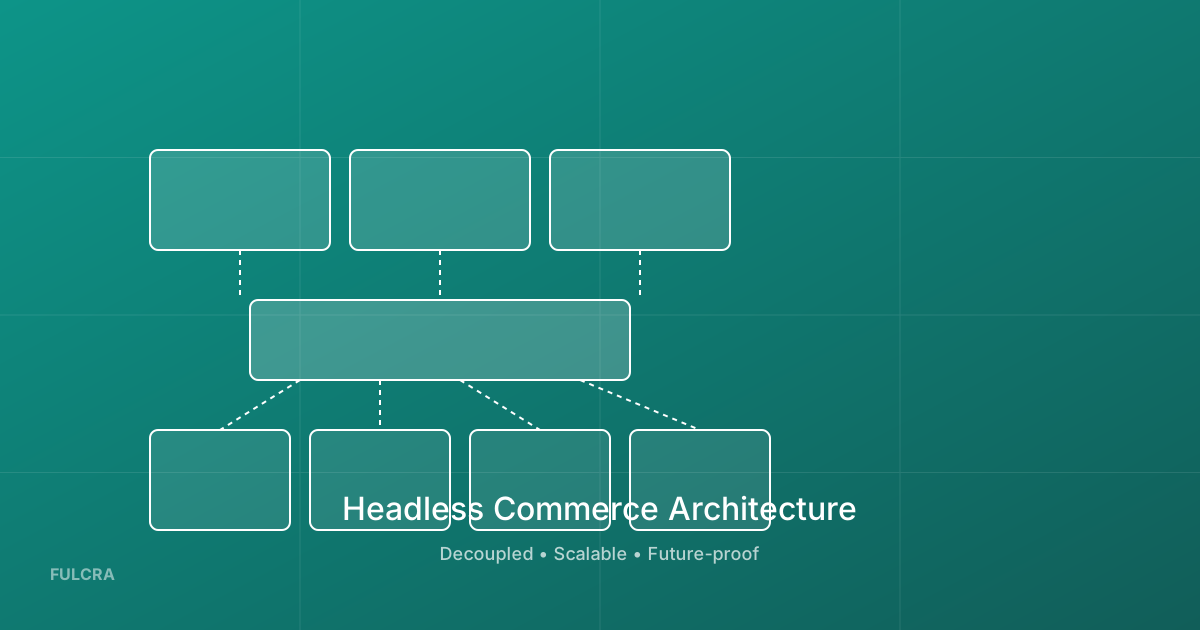
The conversation around headless commerce has shifted. It's no longer a question of whether to decouple your frontend from your commerce engine - it's a question of which headless stack to standardise on.
What changed
Three things converged to make headless the default:
- Next.js App Router matured. Server components, streaming, and ISR are now production-stable. The performance argument for headless got much stronger.
- Composable commerce APIs are everywhere. Commercetools, Shopify Storefront API, SFCC's headless reference architecture - every major platform now ships a first-class API surface.
- Teams got burned by monoliths. The pattern is familiar: tight coupling between the theme layer and the business logic layer means every change is a risk.
The real cost of staying monolithic
It's not about technology preference. It's about velocity.
A typical SFCC monolith deployment cycle at enterprise scale runs 4–6 weeks end to end. A headless stack with proper CI/CD ships the same feature set in days. That's not a minor optimisation - it compounds over time.
Every week you delay is a week your competitors are iterating in production.
What to look for in a headless stack
The non-negotiables for production-grade headless:
- Edge-first rendering - ISR + CDN caching for product pages. Sub-50ms TTFB globally.
- Type-safe API layer - GraphQL or tRPC. No raw REST without types at the boundary.
- Decoupled checkout - Keep payments and checkout logic server-side. Never ship card handling to the client.
- Preview modes - Your merchandising team needs to preview changes before deploy.
The Fulcra approach
We've run headless migrations for luxury retail clients (Kering group brands) and mid-market e-commerce. The pattern that works:
- Audit the existing monolith for what's truly coupled vs what only feels coupled
- Stand up the headless frontend in parallel - never migrate in-place
- Shift traffic incrementally by route, not all at once
- Decommission the old layer only after 30 days of stable parallel operation
The migration pays back within one quarter, consistently.
If you're evaluating a headless migration and want a frank assessment of your current stack, get in touch.